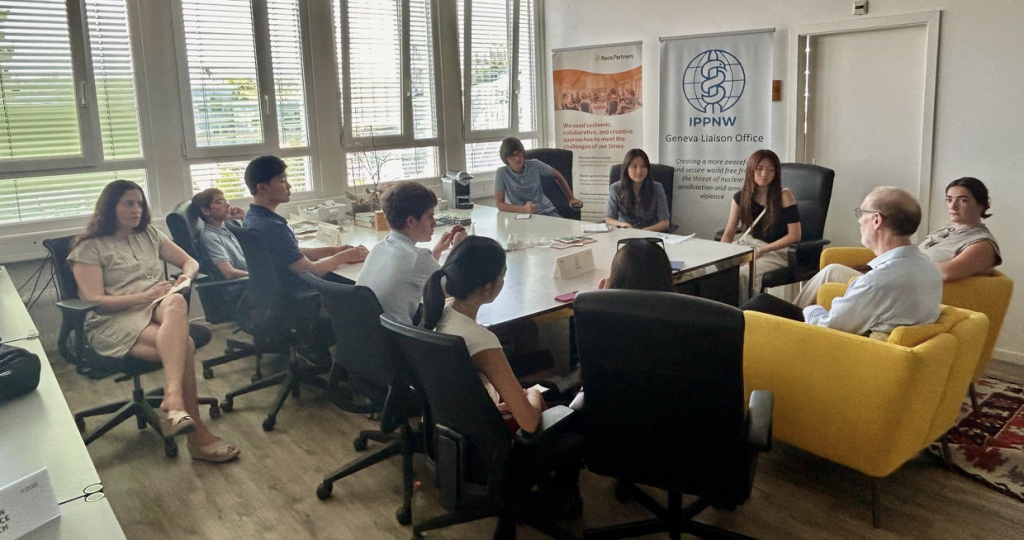
“We cannot have peace without health and we cannot have health without peace.”
~Dr. Tedros Ghebreyesus
Programs
Please click on each topic below to learn more about our recent activities.
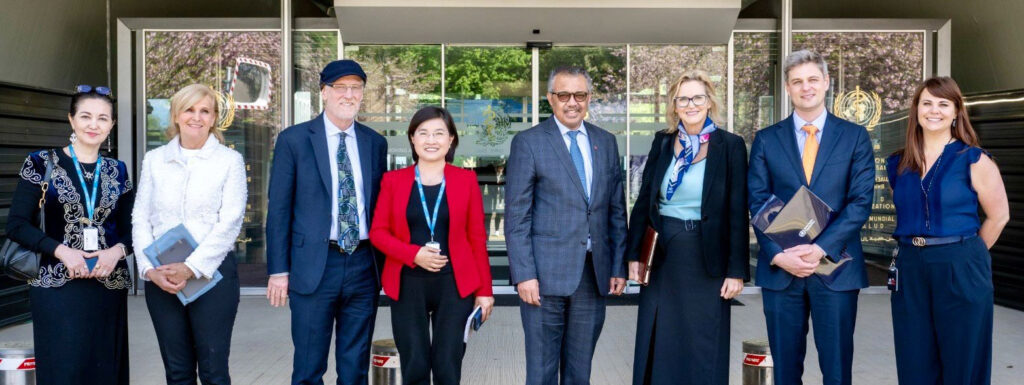
In 1987 and 1993, WHO issued reports on potential health and environmental effects of nuclear war. These previous reports have not been touched since their publication, and a new report has been needed for some time to include, among other things:
- extensive new computer modeling of the climatic, environmental, agricultural and nutritional effects of nuclear war
- conclusions about the lack of capacity of emergency responders to assist victims of nuclear detonations
- studies of health effects upon second generation survivors
- studies on ionizing radiation’s impact upon women, girls, and children
- updating the status and risks of current nuclear arsenals
- emphasizing the responsibility of health professionals in preventing nuclear war
IPPNW’s continuous advocacy led to the passing of a resolution to update the 30-year-old reports at the 2025 World Health Assembly. Updating the WHO baseline reports now will be a clear message to the world that the nuclear weapons threat is not merely a historical concern, but a problem that health professionals prioritize and take seriously today.
See also:
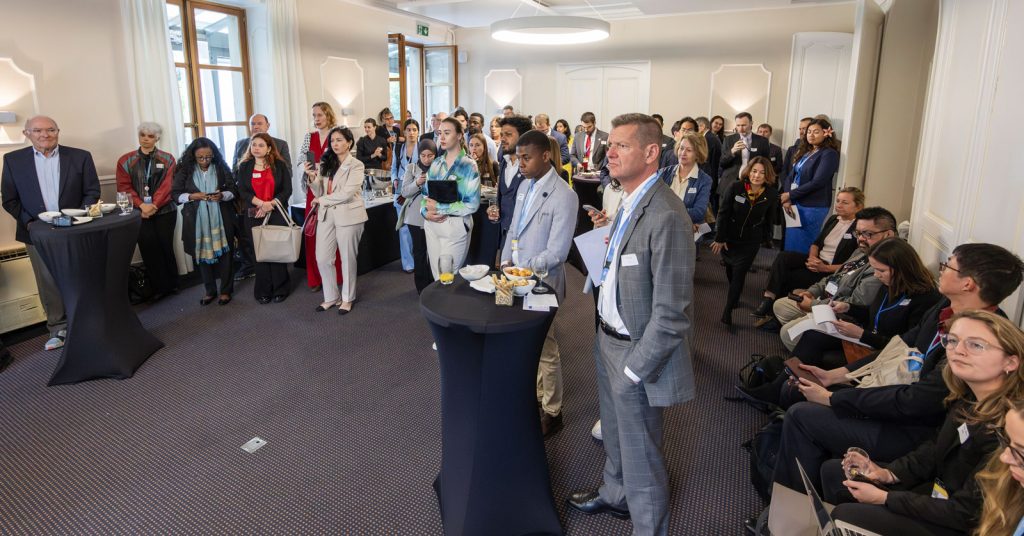
IPPNW-GLO’s side event at the World Health Assembly at the Palais des Nations in Geneva on 31 May, 2024 was well attended by medical professionals and health diplomats from around the globe and was a wonderful public launch for the Geneva Liaison Office.
This event and the coordinated editorial, ” Reducing the risks of nuclear war: the role of health professionals,” in 153 major journals worldwide, helped to reinforce the core responsibility health professionals have to ensure that world leaders and the general public understand the health consequences of nuclear war.
The event included speakers from the World Health Organization, the International Committee for the Red Cross (ICRC), the World Medical Association (WMA), the World Federation of Public Health Associations (WFPHA), the International Council of Nurses (ICN), and the International Federation of Medical Students’ Association (IFMSA).
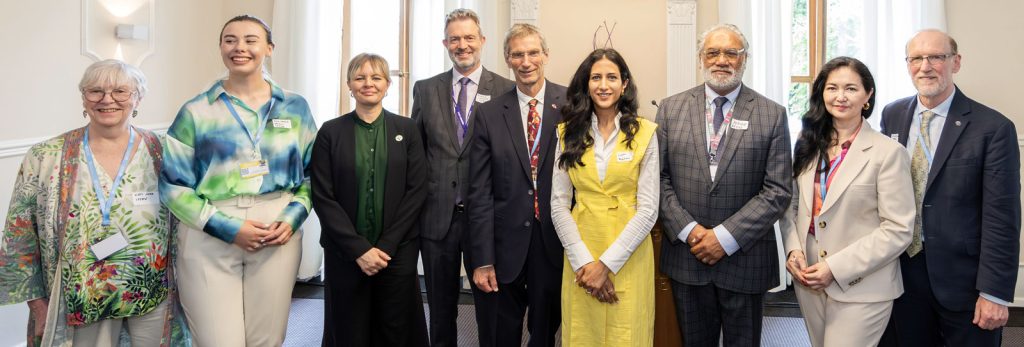
IPPNW Geneva Liaison Office was honored to host the European Regional Meeting — Finding Clarity in Chaos: Creating a Vision of Peace and Security. The event was held in Geneva Friday 11 April to Sunday 13 April.
Geneva plays a unique role as an international city of peace. Speakers from civil society, academia and politics were invited, and participants engaged in lively discussions in advancing our ultimate goal of preventing nuclear war and abolishing nuclear weapons.
Partnerships
Health, Peace, and Climate Initiatives
The connection between human health and global peace is fundamental, yet it faces a new, existential threat: nuclear conflict and its catastrophic impact on the climate. True peace requires more than the cessation of hostilities; it demands the preservation of the planetary systems that sustain life. The specter of nuclear war presents a dual crisis for public health: immediate destruction and long-term system collapse.
Our unique contribution lies in framing nuclear disarmament as a critical health and climate intervention. We challenge the “traditional” view of nuclear war as a local, regional event, highlighting scientific evidence that a nuclear exchange would inject vast quantities of soot into the stratosphere. This would trigger a “nuclear winter”: drastically reducing sunlight, collapsing global agriculture, and causing mass starvation even in countries far from ground zero. For IPPNW, the health sector has a moral imperative to address this climate-weapon nexus, as no healthcare system can function in a world ravaged by such devastation.
While the World Health Organization (WHO) focuses on protecting health systems in conflict zones, IPPNW takes a preventative stance by targeting the root cause: the existence of nuclear weapons themselves. The climate destabilization caused by nuclear winter would destroy the very foundation of the Sustainable Development Goals: particularly those related to health, food security and climate deregulation. Without a total ban on nuclear weapons, we cannot achieve lasting peace or stability.
By integrating health evidence and climate science into our advocacy work, we are working to reframe the debate from a geopolitical strategy to a matter of planetary survival. We mobilize the health community to recognize that preventing nuclear war is the ultimate act of preventive action. The message is clear: ensuring human health and protecting the climate are inseparable goals, and the only way to secure both is to eliminate the threat of nuclear annihilation.
IPPNW-GLO has been very active in supporting Peace, Health and Climate initiatives in Geneva and beyond, building partnerships with a variety of both multilateral and non-governmental actors. Here is a selection of these initiatives:
WHO’s Global Health and Peace Initiative (GHPI) was launched by WHO in November 2019 to respond to this challenging global context and following extensive consultations led by the Sultanate of Oman and Switzerland, in collaboration with WHO’s Regional Office for the Eastern Mediterranean (EMRO). The GHPI aims to strengthen or improve the role of WHO and the health sector as contributors to improving the prospects for peace – for example, by implementing health programs with increased conflict-sensitivity, and where appropriate, contributing to strengthening dialogue, social cohesion or resilience to violence. The ultimate objective in doing so is to better protect the health of populations, especially (but not only) in fragile, conflict-affected, and vulnerable settings. It pursues this goal by advocating programs to follow the ‘Health and Peace Approach’ to programming.
IPPNW is active in this initiative, participating in planning meetings and contributing technical expertise when appropriate on the direct and indirect health consequences of conflict and military expenditure. We provide evidence-based input to refine the ‘Health and Peace Approach’ guidelines, specifically regarding the protection of health infrastructure in volatile regions. In this way, we help to ensure that health interventions are not only conflict-sensitive but also actively promote social cohesion through the shared goal of preserving life, thereby reinforcing the initiative’s core objective of linking health security with sustainable peace.
IPPNW Germany implements an important voluntary training program for doctors that can be accessed through the website medicalpeacework.org.
The Geneva Liaison Office is working with experts to expand this curriculum and integrate the climate dimension, evolving into a “Health-Peace-Climate” framework to better address the realities of this polycrisis: where environmental challenges are inextricably linked to health security and political stability.
Drawing on Medical Peace Work’s pioneering program and models like that from the WHO Academy, this educational framework aims to equip health professionals with the skills to analyze the impacts of both conflict and climate change, and adapt health systems to the growing stresses of environmental and geopolitical instability.
Educational Outreach
IPPNW values youth advocacy for the nuclear-weapon-free world of the next generation.
The Geneva Liaison Office has previously engaged in various educational programs, including guest lectures on health and nuclear war at university lectures, collaborative research projects with master’s students at nearby universities, and welcoming student advocates’ visits from around the world.
If you are an educator who shares our commitment to youth advocacy and education, do not hesitate to get in touch with us!
- Email us to book a guest lecturer
- Follow IPPNW GLO on LinkedIn